70 years ago the 'Dessert Rats' as they were known as won the battle of El Alamein in the World war 2. The battle took place in the dessert in Eyppt close to the border with Libya. It is considered the decisive Battle of World war 2 because it seriously wounded the Nazi Forces, who were intent on creating a Fascist state in Europe. It is to the credit of all the 'Allied' soldiers that died in that war that they stopped Hitler from his goal of controlling the whole of Europe in a Fascist Regime, which based its ideology on an idea of a superior race that would control and exterminate all those who were minorities or who dared to disagree with them. Fascism is the opposite of Freedom.
My father, was a gunner with the 7th Armoured Division, as far as I understand, and he was in the Highland Division of the artillery Units which were known as the 50th. They were the armoured part of the Highland Division manning 25 poinder guns. It is fitting to remember him today on Rememberance Sunday and during the Anniversary of the Battle of the Battle of El Alamein.
Later on this week I will write a small memoir of the things he spoke about the war, when he faught with the Armoured Division for 6 campaigns, in North Africa and Italy. He survived the war, and died in 1997. The memoirs of the war were important to him and throughout his life he continued to work to educate people against the dangers of Fascist ideology. When he died we made sure he wore his Highland Division Tie with a military style funeral and a Scottish piper.
Donald Sutherland 1920 to 1997
Sunday, 11 November 2012

Tuesday, 30 October 2012
Robert Burns -Humanism, God and Social Conscience
Robert Burns was an ‘Everyman’ in the way that he was able to appeal to
believers in God and those firmly against Organised Religion. His approach in
taking an equivocal position on the human spiritual condition earned him
admiration from the Humanist Movement, who considered him their own, but he
also gained admirers in the radical and reforming Religious Movements. An ‘Everyman’ is defined as an ordinary person
representative of the human race.
In literature and drama, the term everyman
has come to mean an ordinary individual [1][2], with whom the audience
or reader is supposed to be able to identify easily, and who is often placed in
extraordinary circumstances. The name derives from a 15th century English morality play called Everyman.
Read more: http://www.answers.com/topic/everyman#ixzz2AmyM16Gf
Read more: http://www.answers.com/topic/everyman#ixzz2AmyM16Gf
The New York
Times reported a speech by Robert Ingersoll in 1878, one of the founders of
modern humanism, on Robert Burns. This is what Ingersoll had to say.
‘The man was a radical a real genuine
man. This man believed in the dignity of labour in the nobility of the useful.
This man believed in human love, in making heaven here, in judging men by their
deeds instead of creeds and titles. This man believed in the liberty of the
soul of thought and speech. This man believed in the sacred rights of the
individual, he sympathised with the suffering and the oppressed. This man had
the genius to change suffering and toil into song to enrich poverty, to make a
peasant feel like a prince of the blood, to fill the lives of the lowly with
love and light.’
The Chair of
the Irish Humanist Association, Iain Decoys in an article in the Irish Humanism
Magazine of 2009 ,called Robert Burns: A Scottish Sceptic. He makes the case
that Robert Burns was a possible follower of Humanism before there was a
movement for it. He eruditely defines Robert’s type of Religious perception
as one of a sceptic in religious matters, who argued publically for 'tolerance
and social justice.’ He robustly argues against the idea the Robert Burns was a
supporter of the sectarian Religious Right wing, despite their supporters arguing
that he was an advocate of their position.
He goes on to say
Burns had to be careful about declaring his scepticism openly as this could
ruin his reputation. Even his friends found it difficult to guess whether he
had faith or whether he was mocking it. But whatever the case, there is a
declaration of faith in this statement to Mrs Dunlop.
‘Jesus
Christ, thou amiablest of characters, I trust thou art no imposter, and that
thy revelation of blissful scenes of existence beyond death and the grave is
not one of the many impositions which time after time have been palmed off on a
credulous mankind’
But this is
of course, a letter to one of the ‘whited sepulchres’, Mrs Dunlop, to whom he
would be obsequious because she was an advocate of the Calvinistic views of the
Church and a person who had the power to make his life difficult.
Tuesday, 23 October 2012
Preview of Robert Burns and Women
On the blog the return button is not working so there is no chance of making paragraphs so one must, as it were, read it in one breath.
For the Romantics among us this is my view on Robert Burns and Women (Pre - View of Academic Course Notes)
Robert Burns was a lover of women from the outset, and it almost seems his poetry was just catching up with his passion for them.
Robert Burns was a lover of women from the outset, and it almost seems his poetry was just catching up with his passion for them.
In his life he had 6 children out of wedlock and 9 children with Jean. Only 3 of the children survived family life, meaning that 6 of them died before adulthood. It is estimated that he must have had over 10 sexual affairs and countless other unconsummated dalliances with women, who then also became the focus of his poetry.
His sexual encounters are legendary because he wrote about them and they are real life affairs making the power of his poetry all the more Romantic because each poem refers to real women in his life at that time. It was as if he was embarking on a theatrical seduction in some cases in that he knew they would become the subject of his poetry but it seems, he also cared for these women at the same time, it was not just mere poetic license.
However there is a downside. He seems to have taken most of the women for granted and once they are pregnant he has all but abandoned them. The worse example of this is the pregnancy of Jenny Clow who was the servant girl of Clarinda, known as Agnes McLehose. It is as if he in, not taking Clarinda to bed, takes his sexual frustrations out on the maid. By all accounts when Clarinda points out how ill Jenny is from the baby, Burns just is not interested in helping out with the child or contributing financially. Therefore there is something amiss in his attitude to women. In the case of Clarinda she suffers from immense social pressures because she is related as a cousin to Lord Craig and her upbringing in the social elite in Glasgow where her father was a surgeon, meant that she could not easily shake off the controversy raging in Ayrshire over his latest pregnant love Jean Armour. However Clarinda may have thought that he would choose her over Jean and she expresses bitter disappointment that he bows to social pressure to marry the maid. It is as if Robert Burns is continually living out some higher idea he has of sexual love that he just can’t quite seem to capture in real life, which he seems to easily master in Poetry. He seems to deliberately portray himself as a man seeking love through his muses, but who fails either to find a Women to return his love, or he for her. His poems are always seeking the moment, and when love is found, it slips away. The best example of this is in the poem Ae Fond Kiss, about Clarinda with whom he parts or similarly with Highland Mary who dies in child birth before he can bring her to his heart. Such tragedy is the stuff of poetry and myth but what makes his poetry work is that the verses are about real women, his real loves. Somehow therefore Burns in his literary personality is the epitome of the Romantic Lover, which in Literature has its equivalents in Bronte’s Heathcliff, or in Shakespeare’s Romeo and Juliet. But what make Burn’s Romance work more effectively even than these Literary Romances, is that none of the poems are divorced from his real life. These women he writes about are his girlfriends, lovers, and friends to the point that his descriptions of them gave him an ethereal quality creating the international image as a man always in love, always passionate and always rejected – a perfect companion for the Muses, for whom he lusted.
Living up to this image was however not easy and it maybe in fact where the fantasy failed to create the reality particularly in his marriage where the sheer struggle to feed the children was taking its toll on both partners. The fact he stood by Jean although she was not his idea of his literary Romantic Love is the measure of the man, in that he stayed with her despite it all, protecting her and making sure she was provided for in life and even after he was gone.
Sunday, 30 September 2012
Film shows it's educational potential
I was surprised when I was asked to teach classes about the poet Robert Burns. But I suppose I should not under estimate the amount of research I put into the screenplay, called, Red Rose about the life of the poet. After five years of research it was finally made in 2003 and then it was distributed across Europe by HBO who translated the script into 11 different languages for their TV channels. It was also screened on TV in China where it was translated into Manderin. At home in Scotland the Sun Newspaper distributed the film with 500,000 DVD's in its daily news circulation. The film therefore reached a mass audience. The fact that a Heritage Course can emerge from this shows that films are part of popular culture, effective in education and stimulate the economy.
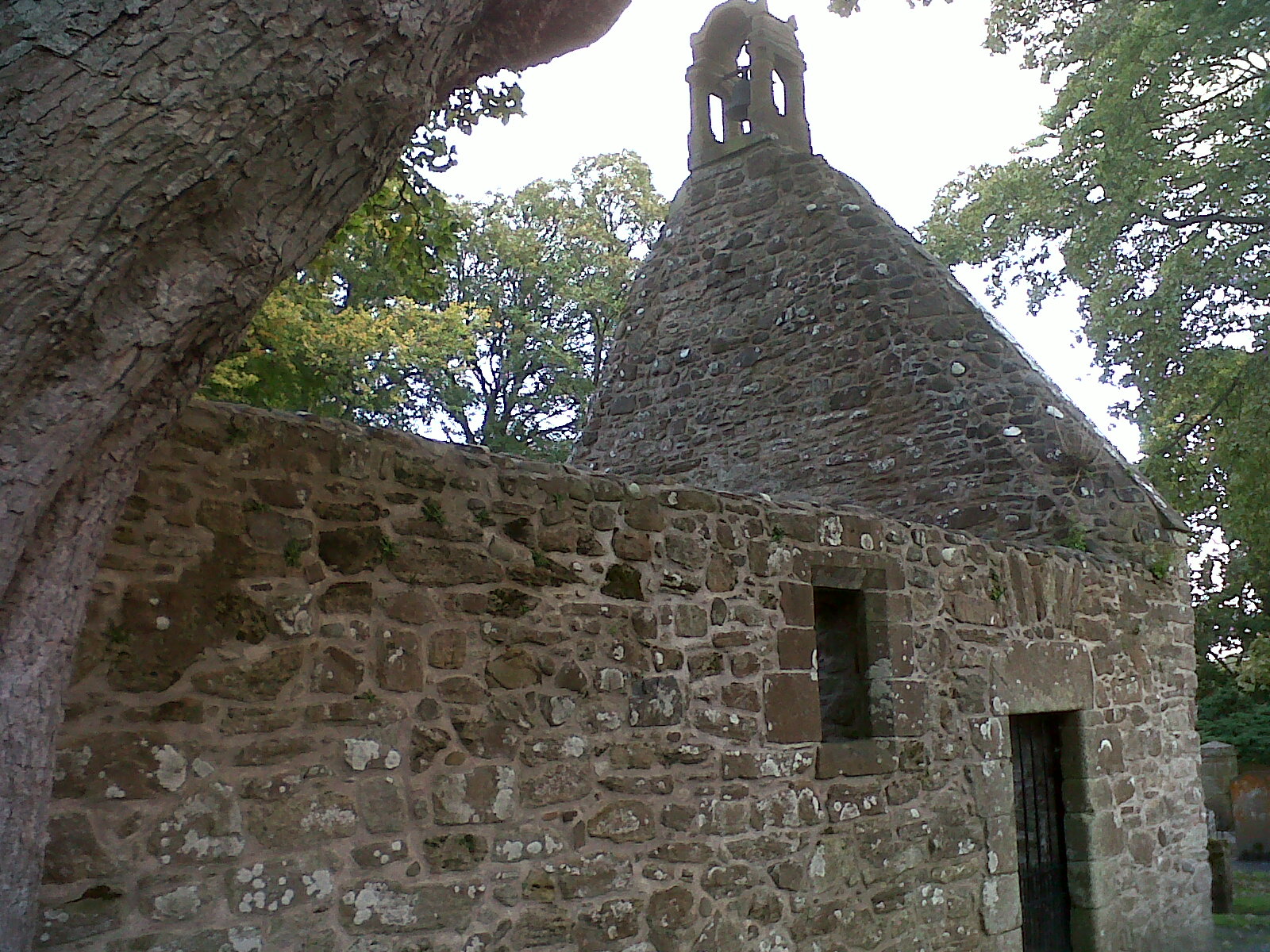
 Above is the Alloway Church made famous by the Robert Burns poem Tam O'Shanter.
Today, the film will help create the basis of a six week course on the life of the poet. Im flattered to be a 'Visting Lecturer'. However I must say it wont stop me from producing films because it is only for a few hours a week and I have plenty other films to be getting on with namely another bio pic on the Life of the little known documentary maker Jenny Gilbertson, who made films about the Shetland Islands in Scotland and the life of the Inuit Indians in Canada. (Seriously worthy cultural stuff) But it doesnt stop there because Im developing an array of different script ideas and possiblities...but I must say the Templar script is langishing unfinished. Something to do for those wintery dark nights I suppose.
 Alloway Church again with that famous bell tower image. Photos taken by Mairi Sutherland.
Sadly the documentaries have alluded me for now, but it is difficult to make them the prime focus with so much else going on. One has to cast ones seeds as it were on all types of ground to see which ones grows first. In the meantime it seems Robert Burns is the focus again at least for the time being. I still await the sound mix of Going Green Movie........

Monday, 27 August 2012
Final Cut Completed
July and August are practically dead for film makers because the acquisition executives go on holiday until September - trying to raise a cogent statement from anybody on the phone is impossible. So those in the know, carry on with their productions waiting until the distribution community gets back to work. I, in the meantime wait to see when the sound mix of Going Green will come about. I completed the final cut in July and I'm happy to say Going Green lived up to it's intial pitch as a 'feel good road movie'.
Here are the lead actors, Darren Enright and Rachael Rath, looking over their lines in between shots, in Spetember last year during the shooting of Going Green.
 While I wait for the sound mix, I have turned my attention to the subject of my first screenplay, Robert Burns who is on my mind because I am devising evening classes about his life for the University of Strathclyde.
Below are some photgraphs from the making of the film, Red Rose, about Robert Burns.
 Above, Jean Armour, wife of Robert Burns played by Lucy Russell along side Robert Burns played by Michael Rodgers.
 Above, Jean and Robert Burns in a pastoral scene with newborn child.
 Michael Rodgers catches the attention of actress Rebecca Palmer who received an award of best actress for her role as Burn's lover, Maria Riddell.
 Always good to have a Redcoat standing by to keep the establisment on their toes. Captain Dodds played by Thomas Hartley.


Friday, 29 June 2012
Red Carpet Ticket


Subscribe to:
Posts (Atom)
-
 Robert Jan Szemis Obituary Robert Jan Szemis was a good friend, marvellous actor and wonderful happy person. He had many gifte...
-
Corrections, Additions and Definitions The BBC Scotland's Radio Documentary Series on Lockerbie Panam103 fails to join the dots and as...
-
 This picture is of the actor Michael Rodgers playing the role of the Scottish poet Robert Burns. It was created by the still photographer C...